
作者:百年不渡 分类:未来幻想 点击:279次 下载:870次 大小:70M 日期:2026-08-26
电影天堂
Robot archer lights up ‘Zhixin’ as 2nd World Humanoid Robot Games open in Beijing_我的网站

一 |

The lights went down inside the National Speed Skating Oval. A humanoid robot riding on a robotic horse, lifted a bow, drew back the string and let the arrow fly.
The arrow found its mark, and the “Zhixin,” or intelligence chip — this competition’s equivalent to the Olympic flame — lit up above the arena. The venue erupted in cheers.
With that, the 2nd World Humanoid Robot Games opened on Saturday at the Beijing venue better known as the “Ice Ribbon” — the capital’s second robotics showcase in a week, following the 2026 World Robot Conference, which opened on August 19.
The opening ceremony began with demonstrations of the 100-meter sprint and the standing high jump. In the sprint, a humanoid robot clocked 9.39 seconds — faster than the men's 100-meter world record of 9.58 seconds set by Jamaican sprint legend Usain Bolt. In the high jump, a humanoid robot reached 288.43 centimeters. Both marks were set by the Tien Kung Ultra humanoid robot by Beijing-based X-Humanoid. Table tennis, tennis, football and other events were then demonstrated jointly by elite human athletes and robots.
The parade of international delegations and robot contingents followed, including formations of humanoid robots from Booster Robotics, Galbot and Noetix Robotics. The robots performed drills as they marched, all of it done autonomously with no remote control.
The X-Humanoid fielded a 50-strong contingent of its Tien Kung 3.0 robots. Tien Kung 3.0 also served as the only robot flag bearer of the games, marching at the head of all contingents while waving the games flag, and it is also the humanoid robot archer who lighted the “Zhixin”, the company told the Global Times.
More than a thousand robots appeared over the course of the ceremony, in a series of joint performances with humans — an opening overture played by humanoid robot musicians alongside a human orchestra, and segments with pop singers, with the judges of the dance events taking the floor themselves, and with children.
Taishan Sports, the Shandong-based official equipment supplier of the games, provided the running tracks, the artificial turf for the football pitches, the floor surfacing for events including the long jump, high jump and weightlifting, and the impact mats that slow the robots down at the end of the sprint lanes.
"Robots are very heavy, and what they need from a surface in terms of hardness and friction is not what a human runner needs, so we adjusted the material formula specifically," Man Fangfang, the vice director of the company, told the Global Times at the venue. The artificial turf was reworked the same way — robots do not play football the way people do, and the turf has to be non-slip and antistatic.
The company spent months talking to the competing teams and retesting the gear before the games. Taishan Sports has supplied equipment to eight Olympic Games and more than 3,000 sporting events, "but this is our first time serving robot games," she said.
China's robotics industry is growing fast and robots are moving into every sector, while the sports industry has always lent itself to crossover with other fields, Man said, adding that the company wants to use the games to work out what equipment suits robots and to develop more of it.
Compared with the first edition, the second games have expanded in both scale and quality. A total of 666 teams and 2,056 robots from 16 countries across six continents are competing, with the number of teams up 138 percent from the first edition and the number of robots quadrupling, according to CCTV.
Competition events have doubled from 26 to 51, while the number of matches has more than doubled from 487 to 1,301. More combative and spectator-friendly events such as martial arts and dance have been added to the competitive program.
Notably, the second games set stricter autonomy requirements for the robots. Except for the 100-meter and 400-meter obstacle races, all track events and other competitive events must be completed by robots fully autonomously. In scenario-based events, a task completed fully autonomously carries a final score weighting coefficient of 1, while one completed by remote control carries only 0.5, per CCTV.
Analysts said the higher bar on autonomy is in line with the industry’s development goal of having robots complete tasks without human operation.
。

二 |
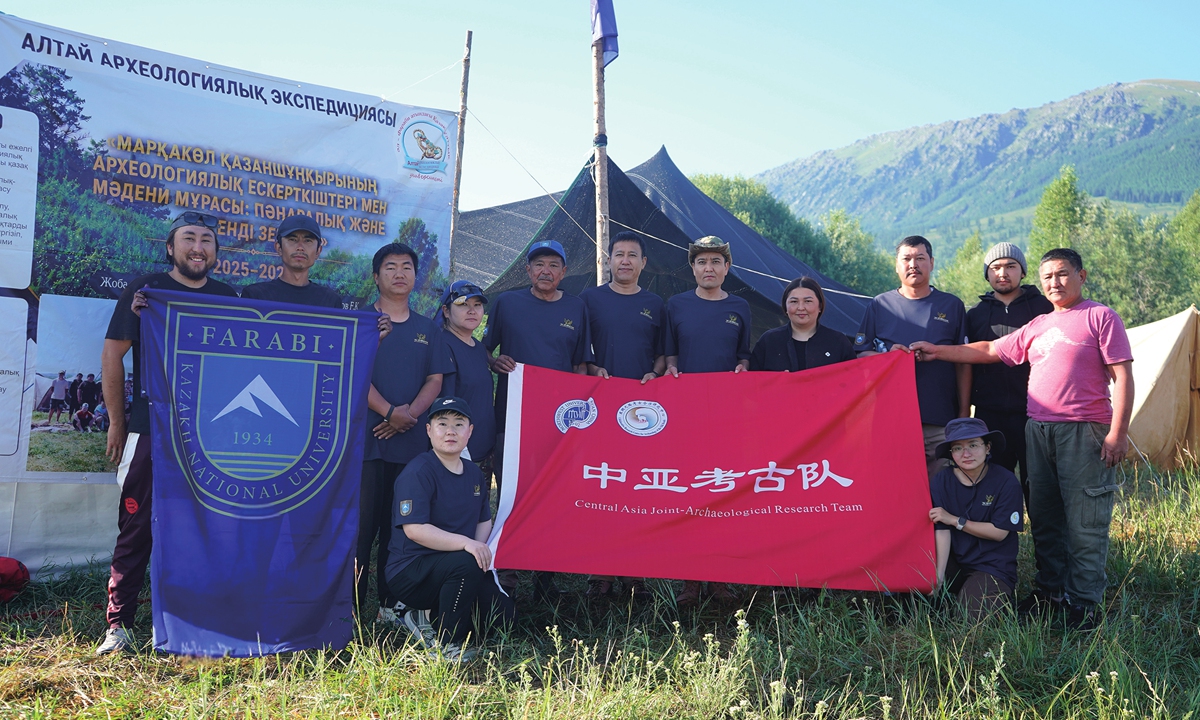
China is set to launch its first joint archaeological project in South America, following an agreement between Chinese and Peruvian institutions to study the ancient Caral civilization. The move marks a new milestone in the country's growing overseas archaeological cooperation.
The Institute of Archaeology of the Chinese Academy of Social Sciences, Peru's Caral Archaeological Zone under the Ministry of Culture, and the Professional School of Archaeology at the National University of San Marcos signed a cooperation agreement on Saturday to conduct research on the ancient Caral civilization.
The Caral civilization, which is considered to be the oldest civilization discovered in the Americas, emerged along Peru's northern coast and dates to around 3000 BC to about 1800 BC.
The project marks China's first joint archaeological initiative in South America, expanding its overseas archaeological footprint to four continents: Asia, Africa, Europe and South America. It also encompasses cooperation with Belt and Road partner countries, major centers of ancient civilizations and regions crucial to the study of human origins.
For Chinese archaeologists, the project represents a new step in overseas archaeological engagement and international cooperation, fostering mutual learning and dialogue among civilizations, Chinese experts said.
Cooperation beyond borders
In recent years, Chinese institutions have participated in a series of overseas archaeological projects, from exploring ancient cities along the Silk Road to studying early civilizations in Africa and Central Asia.
They not only brought Chinese expertise and talent, but also advanced Chinese technologies, equipment and solutions, experts said.
In February, a significant archaeological breakthrough has emerged from Mit Rahina in Giza, the site of ancient Memphis in Egypt, where a joint Chinese-Egyptian mission has uncovered a limestone structure believed to be connected to the temple of King Pharaoh Apries from Egypt's 26th Dynasty (664-525 BC), according to the Xinhua News Agency.
Zhang Hai, head of the Chinese team and an archaeologist from Peking University, told the Global Times in a previous interview that the Chinese contingent applied distinctive methods for documenting and recording finds, while deploying Chinese-developed technologies such as the "4D kankan Meta" 3D scanner for precise, real-time topographic and sectional modeling, plus specialized software for capturing dislocated stone elements in 3D to aid future digital restoration and preservation.
In the latest China-Kazakhstan joint archaeological project, Chinese equipment and technologies played an important role in the team's discoveries.
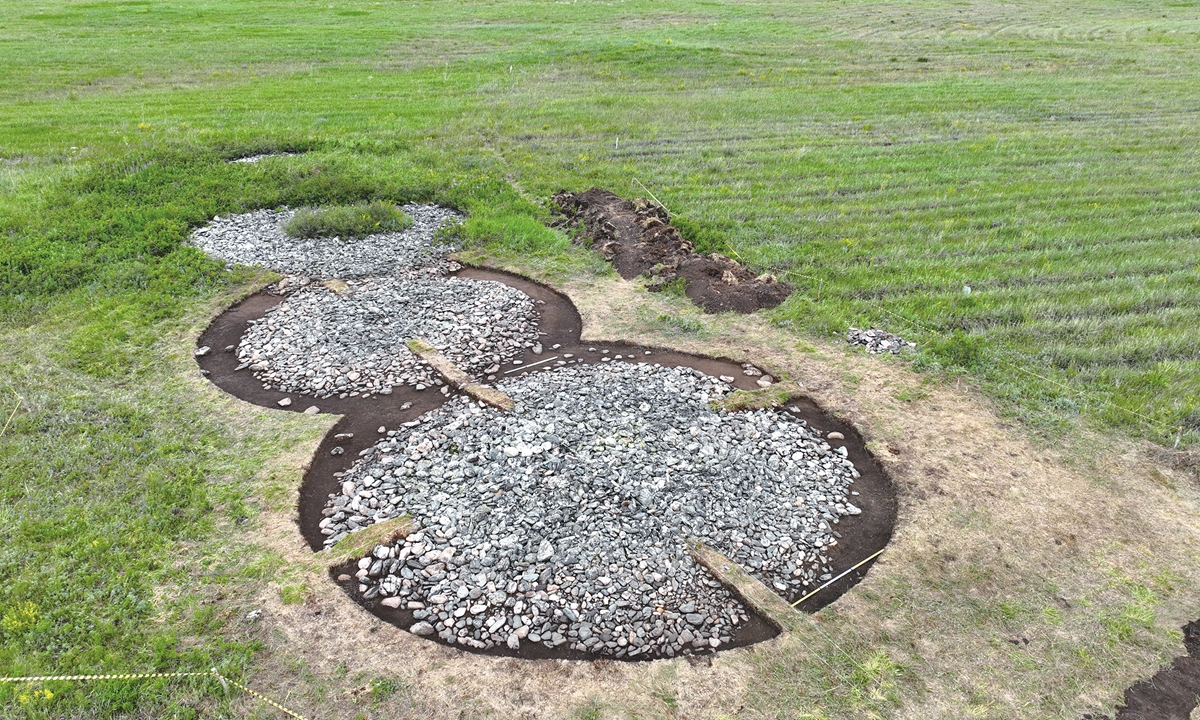
Building on the excavation, the archaeological team used drones and the "I Survey" mobile field documentation system to conduct systematic surveys around the excavation area. The survey covered more than 10 burial grounds and documented more than 50 Pazyryk-era tombs.
Pazyryk culture flourished from the late sixth century BC to the third century BC, Shao Huiqiu, a professor at the Collaborative Research Center for Archaeology of the Silk Roads, Northwest University, told the Global Times.
According to Shao, who is the Chinese lead for the China-Kazakhstan joint archaeological project, none of the tombs had previously undergone formal excavation, giving them significant research potential. The use of these technologies has enabled the team to carry out more efficient and comprehensive surveys of the area,
During the China-Kazakhstan joint archaeological project, archaeologists have recovered a number of important artifacts, including human remains, pottery, gold foil pieces, horse bones and iron horse equipment.
The finds have provide valuable material evidence for studying the burial practices, funerary customs and material culture of the Pazyryk culture in the Lake Markakol region, said Shao.
Researchers also conducted regional surveys around the excavation area, documenting more than 50 Pazyryk-era tombs.
Through the joint archaeological project, China and Kazakhstan have gained a deeper understanding of Bronze Age to Early Iron Age archaeological remains in the Lake Markakol basin, according to Shao.
In 2027, the two sides will continue excavations at key sites and burial grounds identified during the survey, while advancing regional archaeological investigations, data analysis, multidisciplinary research, young archaeologist training and academic exchanges.
Archaeological exchanges
China's overseas archaeological cooperation has also become a platform for broader exchanges among researchers and civilizations.
Such projects, experts say, are helping expand archaeological research beyond national borders and provide new perspectives on exchanges among ancient civilizations.
China's overseas archaeology has grown alongside its broader participation in global cultural heritage protection.
The National Cultural Heritage Administration's cultural heritage development plan through 2030 calls for expanded archaeological cooperation in Austronesian-speaking regions, trans-Himalayan areas, and routes connected to the Silk Road and Maritime Silk Road, reported Xinhua.
The plan seeks to strengthen the methods used to trace Chinese cultural artifacts overseas, and advance efforts to retrieve lost cultural relics.
It also pushes for greater Chinese participation in global cultural heritage governance and expanded international partnerships, including new protection cooperation agreements with more countries worldwide, according to Xinhua.
In these joint collaborations, researchers from different countries bring together their expertise in regional archaeology and fieldwork, conducting exchanges on archaeological surveys, excavations, multidisciplinary research and regional cultural studies. Such cooperation has strengthened mutual learning and laid a foundation for long-term partnerships, according to Shao.
The China-Uzbekistan cooperation has established research centers in Samarkand and Termez to support studies on human-environment interactions and cultural heritage. The initiative has also trained professionals in Silk Road archaeology, scientific research and heritage conservation through programs for Uzbek universities and research institutions, while promoting international academic exchanges to advance Silk Road heritage protection and cultural cooperation, noted Zhu Jiangsong, a member of the China-Uzbekistan joint archaeological team from the School of Cultural Heritage, Northwest University.
Through these partnerships, Chinese archaeologists are not only contributing technology, research experience and training, but also gaining first-hand materials and fresh perspectives that help advance the study of ancient civilizations and enrich China's archaeological research.
。
Current article:http://t39pyb.tichannangenzhuchuapin.cfd/list_0kn/jcm.html
Published on:13:53:58


电影天堂TXT下载声明:
1 我的网站免费提供的电影天堂,均由网友上传,供下载测试之用,不作商业用途,下载后请二十四小时后删除!
2 我们根据txt小说全文所整理出电影天堂txt电子书全集免费下载,由程序自动生成电影天堂txt下载文件。
3 书友所发表的txt小说电影天堂的相关评论,并不代表本站赞同电影天堂txt下载或者支持电影天堂的读者观点。
4 如果发现小说《电影天堂txt全集》无法下载未及时更新请联系我们。如果您喜欢电影天堂txt电子书,请支持作者到书店购买正版图书。感谢您的合作与支持。
5 好看的小说电影天堂是作者"百年不渡"的最新力作,电影天堂电子书由网友发布;小说电影天堂版权属于作者所有,如果侵犯您的利益,请通知我们。